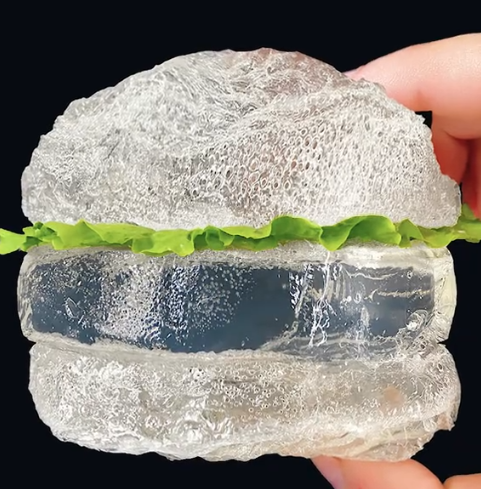
Transparent Burger: When Molecular Gastronomy Meets Everyday Food
In the modern culinary world, food has long transcended the mere experience of taste; it has gradually become a fusion of visual art and scientific experimentation. Since the late 20th century, the rise of molecular gastronomy has broken the boundaries of the traditional kitchen, giving food a whole new form and expression. One recent innovation that has garnered significant attention is the “transparent burger.” At first glance, its crystal-clear appearance resembles an installation in an art exhibition rather than a typical dinner plate. However, upon taking the first bite, the flavor is virtually identical to a classic burger. This “disjunction between vision and taste” is precisely the most captivating aspect of molecular gastronomy.
Transparent ketchup: culinary inspiration from chemistry class
The most attractive thing about the transparent burger is the transparent ketchup. Ordinary ketchup is red, but through some special methods, you can make a delicious and colorless ketchup.
The key lies in the ” clarification” step . First, the tomatoes are boiled into a puree, then filtered through filter paper, resulting in a clear but slightly murky broth. To further enhance clarity, a little egg white is added. When heated, the egg white combines with impurities and color in the broth, forming flocs that settle. After another filtering, the broth becomes almost completely transparent. Finally, a little starch is added and allowed to cool, resulting in a gel-like, transparent “sauce.” While it may look different from regular ketchup, it retains the same sweet, sour, and fruity flavor.
This practice isn’t actually new. As early as the 19th century, chefs at European banquets used egg whites to clarify broth, creating a clear “consommé.” Today, this traditional technique is cleverly adapted for modern and creative cuisine.
Transparent beef patties: the clever idea of gelling the broth
The heart and soul of a burger is, of course, the beef patty. In the Transparent Burger, this part is also reimagined through scientific means.
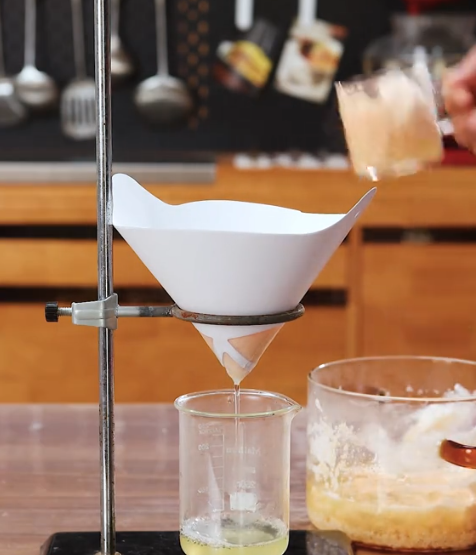
The first step in making the transparent beef patties is to simmer the beef and hide over low heat for a long time to extract the collagen and meaty aroma. After filtering out the meat residue, the broth still needs to be clarified. This method borrows from the famous Sichuan dish “boiled cabbage”: minced chicken breast is added to the broth and filtered again to produce a nearly colorless and transparent beef broth.
The broth is then poured into molds and refrigerated, where it solidifies at low temperatures using natural gelatin or collagen to form a crystal-clear “patty.” Despite the visual difference, the rich meaty aroma is still released when you put it in your mouth, highly consistent with the taste memory of traditional beef patties.
Transparent Bread: The Biggest Challenge in Food Styling
Compared to ketchup and beef patties, transparent bread is more challenging to create. Bread’s fluffy texture is due to the gluten structure that forms during fermentation and baking, and this system is not suitable for a transparent appearance. Therefore, chefs turn to starch substitutes.
Kudzu root powder and potato starch are mixed into a paste, poured into a mold, and then heated in an air fryer to puff and set. This process is not easy: even the slightest deviation in temperature or ratio can result in a misshapen “failure.” Only through repeated adjustments can a transparent substitute with a complete appearance and a texture similar to bread be achieved.
The final “transparent bread” tastes more like a mixture between crispy bread and steamed cake, but it can serve as the “sandwich” of a hamburger.
The misalignment of vision and taste
The transparent burger is so memorable precisely because it creates a visual-taste mismatch. It looks like a glass sculpture, yet tastes like a familiar burger. This contrast triggers a dual reaction in the brain: confusion and novelty.
From a psychological perspective, this experience is a form of “cross-modal perception.” Studies have shown that when visual and gustatory information conflict, the brain briefly experiences a state of confusion, which is one of the sources of novelty and pleasure. In other words, the transparent burger isn’t just food; it’s a psychological experiment.
The cultural significance of molecular gastronomy
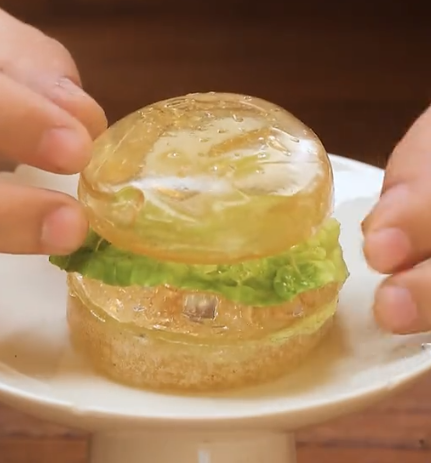
The transparent burger is more than just a curiosity. It reflects how molecular gastronomy redefines food: food is not only a source of nutrition and energy, but also a medium for exploring science and aesthetics.
The concept of molecular gastronomy was first proposed in the 1980s by Hungarian physicist Nicholas Kurti and French chemist Hervé This. They advocated for a scientific approach to understanding and transforming the cooking process, emphasizing the role of temperature, molecular structure, and chemical reactions in cooking. Since then, high-end restaurants around the world have begun experimenting with innovative techniques such as “liquid nitrogen ice cream,” “foam sauce,” and “spherical juice.”
The emergence of the transparent burger is an extension of this concept in popular culture, reminding people that even the most everyday food can be completely reshaped through scientific methods.
Possibilities on the daily dining table
While the transparent burger sounds complicated, many of the techniques involved can actually be easily tried in a home kitchen. For example:
Clear juice gel : Use apple juice instead of tomato soup and combine it with gelatin to make a clear “jam”.
Clarifying Broth : Clarifying broth with egg white not only improves clarity but also creates a purer taste.
Starch pancakes : Corn starch or tapioca flour are used to make a translucent pancake crust that is both light and chewy.
These small experiments may not be able to replicate a complete transparent burger, but they can allow people to experience the charm of molecular cuisine more intuitively.
Summarize
The Transparent Burger is more than just a dish; it’s a concept. Combining science and art, it challenges our understanding of the burger. Its crystal-clear exterior, yet familiar flavor, is one of the most appealing qualities of modern cuisine.
Perhaps this leads to a further question: Should current food innovations move towards technological wonders or return to the original flavors of nature? The existence of the transparent burger provides an opportunity for reflection.